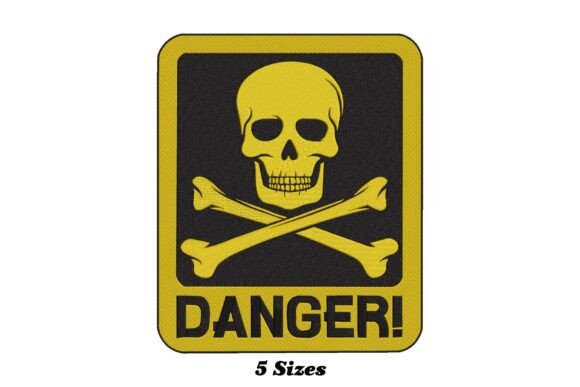
Skull Danger Sign: A Bold Embroidery Design Review
As an experienced embroidery designer who spends weekends hunched over my machine and weekdays planning booth layouts for craft fairs, I have learned one hard truth: customers do not buy files; they buy finished products that make them feel something. When I first saw the Skull Danger Sign design, my immediate reaction was a mix of intrigue and caution. The title suggests boldness, edge, and perhaps a touch of rebellious humor. For a craft fair seller or an Etsy shop owner looking to diversify their inventory, understanding whether this design fits your brand aesthetic is crucial before you commit to production.
This review evaluates the Skull Danger Sign from a practical, commercial perspective. We will look at how it performs on various textiles, its potential as a craft fair product, and the technical considerations required to ensure your final output looks professional rather than amateurish.
First Impressions: Visual Impact and Market Appeal
The description promises a "bold and edgy touch." In the world of handmade goods, "edgy" can be a double-edged sword. It attracts a specific demographic—think rock enthusiasts, alternative fashion lovers, or parents with a sense of humor—but it may alienate buyers looking for soft, traditional, or farmhouse aesthetics. However, if executed correctly, this design has high visual impact.
At a glance, a skull motif combined with a danger sign creates a strong graphic silhouette. This is excellent for booth displays because it stands out against softer, more common floral or script designs. It grabs attention. But does it translate well to actual merchandise? That depends entirely on where you place it.
Best Product Applications for Skull Danger Sign
Not every fabric behaves the same way. To maximize sales, you need to match the design’s weight to the product’s surface area and texture. Here is where Skull Danger Sign shines:
- Tote Bags: A canvas tote bag is the holy grail of craft fair items. Stitching this design centrally on a black or dark grey canvas creates a striking contrast. It transforms a basic accessory into a statement piece. This is ideal for an Etsy seller looking for a low-cost, high-perceived-value item.
- Apron Embroidery: Kitchens are full of neutral tones. A bold skull design on a denim apron adds personality without being overwhelming. It appeals to home cooks who want a bit of attitude in their space. Ensure the placement is centered on the bib or pocket for balance.
- Embroidered Patch: If the design is dense, consider digitizing it as a patch. Patches are incredibly popular for jackets, backpacks, and hats. They allow customers to customize their gear, which increases engagement at your booth.
- Caps and Beanies: Curved surfaces like baseball caps require careful testing. A skull design might look distorted if the hoop size is not chosen wisely. Test this on a cap frame before committing to bulk production.
- Tea Towel Embroidery: While skulls are less common here, a small, stylized version could work as a quirky gift item. However, avoid placing large, complex details on thin tea towel fabric, as the texture may obscure fine lines.
Production Practicality: What Sellers Need to Know
Creating a beautiful digital file is only half the battle. The real challenge lies in the stitching process. As a designer, I always advise checking the following technical aspects before listing a small shop product.
Stitch Density and Detail Clarity
The term "danger sign" implies text or symbols that must be legible. Skull motifs often contain intricate bone structures or shading. If the stitch density is too high, the fabric may pucker, especially on lightweight materials like t-shirts or thin cotton blends. Conversely, if the details are too fine, they may disappear when stitched on textured fabrics like towels or burlap.
Pro Tip: Always test the design on scrap fabric that matches your final product. Look closely at any lettering or small graphical elements. If the lines merge together, you may need to simplify the design or increase the spacing between stitches.
Fabric Texture and Thread Contrast
The success of Skull Danger Sign relies heavily on thread colors. Dark fabrics (black, charcoal, navy) will make white or bright-colored threads pop, enhancing the "edgy" vibe. On light fabrics, you might need a contrasting thread color to ensure visibility. Be wary of textured fabrics; the uneven surface can cause the needle to skip or create inconsistent tension.
For commercial embroidery purposes, consistency is key. If you plan to produce batches of 50 tote bags, ensure your stabilizer choice supports the fabric weight. Cut-away stabilizers are generally recommended for woven bags and heavy cottons to prevent distortion during wear and washing.
Hoop Size and Placement
Before you start stitching, confirm the hoop size required by the embroidery file. If the design is large, you may need a larger hoop, which limits your placement options on smaller items like pouches or baby onesies. Remember, while the category mentions "Babies," a skull design is likely too aggressive for infant wear unless stylized in a very cute, cartoonish manner. Verify the scale carefully.
Selling Strategy: From Booth to Online Listing
How you present the finished product determines its saleability. In a physical market, lighting and display matter. Hang tote bags so the design faces outward. Use mannequins for aprons to show fit. At a craft fair, people touch what they see. Ensure the edges of the embroidery are clean and free of loose threads.
For online sellers, printable mockups are essential. High-quality images showing the design on different backgrounds help buyers visualize the product. Include close-up shots that highlight the stitch quality and thread sheen. If you sell digital embroidery files, provide clear instructions on recommended fabrics and stabilizers to reduce customer complaints.
Final Verdict and Designer Notes
The Skull Danger Sign embroidery design offers a unique opportunity to tap into the alternative and edgy market segment. It is versatile enough for home decor, apparel, and accessories, provided you pay attention to production details.
Key Takeaways for Craft Fair Sellers:
- Test First: Never mass-produce without a sample. Check for puckering, thread breaks, and detail loss.
- Choose Your Fabric Wisely: Sturdy fabrics like canvas and denim yield the best results for bold designs.
- Highlight the Edge: Use marketing language that appeals to individuality and style.
- Check Licensing: Before selling finished products commercially, confirm the commercial embroidery license terms for the design asset.
By treating Skull Danger Sign with respect and understanding its technical requirements, you can create compelling handmade products that stand out in a crowded marketplace. Whether you are a seasoned pro or a new Etsy seller, this design has the potential to be a standout item in your collection.