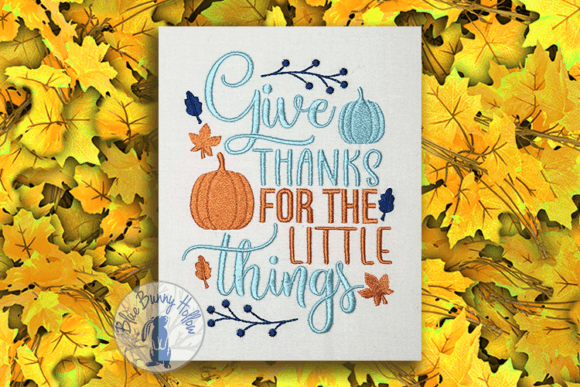
Give Thanks for the Little Things Design Review
As an embroidery designer who has spent years translating digital concepts into tangible thread, I look at every new design file through a specific lens: Does this sell? Does it hold up on a cap? Does it read clearly on a tote bag? And most importantly, does it elevate the brand of the small business owner using it? Today, I am reviewing the "Give Thanks for the Little Things" machine embroidery design. With its promise of celebrating the cozy simplicity of fall through pumpkins and leaves, this piece seems tailor-made for the autumn season. But is it ready for commercial production? Let’s break down the visual personality, practical application, and strategic value of this design for your small business merch.
The First Impression: Cozy Meets Professional
When you first open a digital embroidery file, the immediate reaction matters. The title "Give Thanks for the Little Things" suggests warmth, gratitude, and approachability. Based on the description showcasing pumpkins and leaves in a charming arrangement, this design likely leans into a rustic yet polished aesthetic. For a small business, whether it is a local café, a boutique bakery, or a handmade craft studio, this vibe is gold. It feels friendly without being childish, and elegant without being stiff.
In the world of branded merchandise, there is a fine line between looking like a generic holiday decoration and looking like a curated brand asset. This design appears to strike that balance. The combination of seasonal motifs (pumpkins and leaves) with a message of gratitude creates a narrative that customers connect with emotionally. It doesn’t just say "It’s October"; it says, "We appreciate you." That emotional hook is critical for building customer trust and recognition, especially during the high-traffic Thanksgiving period.
Real-World Business Applications
So, where does "Give Thanks for the Little Things" shine in a real-world commercial setting? As an embroidery designer, I see multiple high-value applications for this design across various product categories.
- Embroidered Patches: This design is ideal for creating sew-on or iron-on patches. Small businesses often use these as loyalty rewards for regular customers or as part of a limited-edition collection. The balanced composition of pumpkins and leaves allows for a clean circular or shield-shaped patch layout that looks premium.
- Staff Uniforms and Aprons: Imagine a barista wearing a black apron with this design embroidered subtly on the chest pocket. It adds a touch of personality to the uniform without overwhelming the wearer. For a florist or baker, this design reinforces the brand’s connection to nature and hospitality.
- Cap Embroidery: Autumn is peak season for trucker hats and structured caps. Placing this design on the front panel offers a classic look. The natural elements of the design complement the casual nature of headwear, making it a perfect accessory for outdoor markets or farm-to-table events.
- Tote Bag Design: Canvas totes are ubiquitous in the handmade product space. A centered or pocket-placed version of this design turns a simple bag into a walking advertisement. The text provides a clear focal point, while the imagery adds visual interest that encourages impulse buys.
- Product Packaging Accents: Beyond apparel, consider using this design on branded tags attached to candles, soaps, or baked goods. A small embroidered label adds significant perceived value to the finished product, signaling quality and attention to detail.
Strategic Brand Identity and Customer Engagement
Using "Give Thanks for the Little Things" is not just about adding a graphic; it is about reinforcing your brand identity. Consistency in visual presentation helps customers identify your products instantly. When your merchandise reflects values like gratitude and community, it fosters deeper engagement. Customers are more likely to share photos of their purchases if the design resonates with them personally. This organic marketing is invaluable for Etsy sellers and digital embroidery file buyers looking to expand their reach.
Furthermore, this design supports a cohesive look across different design assets. If your brand uses earth tones and natural textures, this embroidery file will integrate seamlessly. It enhances the handmade presentation, making your small business merch feel curated rather than mass-produced.
Where to Use Caution: Technical Considerations
Even the best designs have limitations. As a professional, I must advise caution in certain applications to ensure the longevity and clarity of the embroidery.
- Small Patch Sizes: If you plan to scale this design down significantly for tiny labels, be mindful of the detail. Fine lines in the leaves may merge together if the stitch density is too high or the size is too small. Always test at 100% intended size before committing to bulk production.
- Curved Surfaces: While caps are great, highly curved surfaces can distort the text. Ensure the hoop size accommodates the curvature without stretching the fabric unevenly, which could warp the lettering of "Give Thanks for the Little Things."
- Dark Uniforms and Fabric Texture: Contrast is key. On dark fabrics, ensure the thread colors chosen provide enough visibility. Similarly, textured fabrics like heavy wool or rough canvas can obscure fine details. Smooth cotton blends or twill usually yield the crispest results for this type of design.
- Frequent Washing: For items like aprons and work shirts that undergo frequent laundering, proper stabilization is non-negotiable. Without it, the design may pucker or shift over time, damaging the professional appearance of the garment.
Practical Designer Notes for Production
Before you upload this embroidery file to your machine or send it to a manufacturer, follow these essential steps to guarantee a successful outcome.
- Test in Black and White: Convert the design to monochrome to check the balance of positive and negative space. This helps you see if the design is too busy or if it lacks visual weight.
- Check Thread Color Contrast: Select threads that pop against your target fabric. Warm autumnal tones like burnt orange, deep red, and mustard yellow will enhance the pumpkin and leaf motifs, but they must contrast sufficiently with the base material.
- Inspect Spacing and Density: Look closely at the stitching paths. Are there areas where stitches might overlap awkwardly? Is the spacing between elements logical? Proper spacing ensures the design breathes and remains legible.
- Confirm Hoop Size: Verify that the design fits within your standard hoop dimensions. If the design is large, you may need a multi-hoop setup, which increases production time and cost.
- Test on Real Fabric: Never assume how a design will look on paper. Run a sample on the actual fabric you intend to use. Check for puckering, thread breaks, and overall drape after washing.
- Create a Printable Mockup: Before producing inventory, create a high-quality mockup for client approval or social media promotion. This allows you to gauge customer reaction and refine your marketing strategy.
- Compare Beside Other Assets: Place this design next to your other logo variations or seasonal designs. Does it fit the family? Visual consistency strengthens brand recall.
- Confirm Commercial Licensing: Finally, always review the license terms associated with the digital embroidery file. Ensure you have the right to use "Give Thanks for the Little Things" for commercial purposes, including selling finished goods.
Final Verdict
"Give Thanks for the Little Things" is a versatile, emotionally resonant design that offers strong potential for commercial embroidery projects. Its charming arrangement of pumpkins and leaves makes it an excellent choice for custom apparel, tote bag design, and branded accessories. By paying attention to technical details like stabilizer choice, thread contrast, and fabric texture, you can transform this digital concept into a premium physical product that delights customers and boosts your brand’s profile this Thanksgiving season.