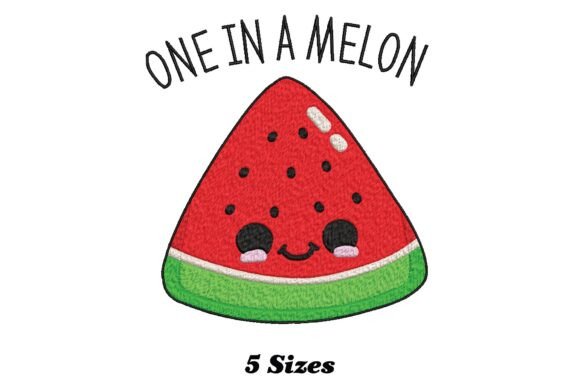
One in a Melon Funny Watermelon Design Review
As an embroidery designer who has spent years translating digital concepts into tangible textile experiences, I approach every new machine embroidery design with a critical eye. We aren't just looking for something that looks good on a screen; we are evaluating whether it holds up under the needle, performs well on various fabrics, and ultimately adds value to a small business merch line. Today, I am reviewing the "One in a Melon Funny Watermelon" design. Based on its title and description, this piece promises to enhance fabrics with a dash of charm, offering a playful and whimsical touch suitable for t-shirts, towels, or home decor. But does it translate effectively to professional branded goods?
First Impressions: Personality and Professionalism
The title "One in a Melon" immediately signals a pun-driven, lighthearted tone. In the world of branding, humor is a powerful tool for engagement, particularly for brands that want to appear approachable, friendly, and human. This embroidery file likely leans toward a bold, playful aesthetic rather than a minimalist or strictly corporate look. For a small café, a boutique bakery, or a handmade soap brand, this personality aligns perfectly. It suggests a brand that doesn’t take itself too seriously but cares deeply about the details.
However, the word "whimsical" requires careful handling. Whimsy can easily tip into clutter if the stitch work is too dense or the outlines too thin. As a designer, my first instinct is to assess whether the design feels premium or cheap. A well-executed watermelon motif should feel crisp and clean, even when conveying fun. If the design relies heavily on tiny text or intricate shading, it risks losing definition when stitched at smaller sizes. The goal here is to ensure the design reads as a deliberate brand asset rather than just a decorative afterthought.
Real-World Business Applications
Let’s move beyond theory and look at how this design functions in actual production scenarios. The versatility of a fruit-themed pun makes it surprisingly adaptable across several categories of custom apparel and accessories.
- Embroidered Patches: This design would excel as a detachable patch. Whether sewn onto denim jackets, canvas tote bags, or backpacks, the "One in a Melon" graphic offers a distinct visual anchor. Patches allow customers to personalize their gear, which increases perceived value and encourages social media sharing.
- Staff Uniforms and Aprons: For a juice bar, smoothie shop, or summer pop-up stall, this design adds character to staff uniforms. Placing it on the chest pocket of a white apron or the sleeve of a work shirt creates a cohesive yet fun team identity. It helps break the monotony of standard uniform policies while maintaining professionalism through consistent placement.
- Cap Embroidery: Curved surfaces like baseball caps present unique challenges. A round or oval watermelon design often fits the curvature of a cap front better than rectangular layouts. If the design includes lettering, ensure the curve matches the hat’s profile to avoid distortion.
- Tote Bag Design: Canvas totes are a staple for handmade product sellers. A centered or offset placement of this design on a natural-colored tote bag reinforces the eco-friendly, artisanal vibe many small businesses strive for.
- Product Packaging Accents: Beyond clothing, consider stitching this onto reusable produce bags or gift tags. It turns packaging into a marketing tool that customers keep and use repeatedly.
Where Caution Is Required
Not every application is created equal. There are specific scenarios where this design might struggle, and knowing these pitfalls is what separates a novice from a pro.
- Small Patch Sizes: If you plan to scale this design down to less than two inches, you must scrutinize the detail level. Fine lines and small text may merge together, creating a muddy blob. Always test at 100% scale before committing to bulk orders.
- High Stitch Density: Designs with heavy fill stitches can become stiff and uncomfortable, especially on lightweight fabrics like thin cotton tees or silk blends. Check the stitch density to ensure it remains flexible.
- Fabric Texture and Color: Dark uniforms require a high-quality underlay and potentially a white backing layer to prevent show-through. Conversely, textured fabrics like boucle or heavy tweed can obscure fine details. Stick to smooth, stable fabrics for the best result.
- Frequent Washing: For items like aprons or work shirts that undergo industrial laundering, the thread colors must be colorfast. Ensure the design uses durable threads that won’t fade or pill after multiple wash cycles.
Impact on Brand Identity and Customer Trust
Every stitch contributes to your brand identity. Using a design like "One in a Melon" communicates specific values: creativity, warmth, and attention to detail. When executed correctly, it boosts customer trust by showing that you invest in quality merchandise. Customers associate well-made embroidered goods with reliability. If your logo or accent design frays, peels, or looks misaligned, it reflects poorly on the entire brand.
Furthermore, this design enhances buyer engagement. Humorous or charming designs invite conversation. A customer wearing a tote bag with this motif is likely to receive compliments, providing organic word-of-mouth marketing. It transforms passive consumers into active brand ambassadors.
Practical Designer Notes for Production
Before you upload this file to your embroidery machine for commercial projects, follow these essential steps to ensure a flawless finished product.
- Test in Black and White: Convert the design to monochrome to check contrast and balance. This reveals if certain elements are too light or too heavy without the distraction of color.
- Check Thread Color Contrast: Ensure the chosen thread colors stand out against your target fabric. Low contrast leads to designs that are hard to read and look unprofessional.
- Inspect Spacing and Hoop Size: Verify that the design fits within your intended hoop size. Also, check the spacing between elements to ensure nothing gets cut off during trimming.
- Use Proper Stabilizer: The choice of stabilizer (cut-away vs. tear-away) depends on the fabric weight. Heavy stabilizers prevent puckering, while lightweight ones maintain softness.
- Create a Printable Mockup: Before cutting fabric, generate a printable mockup to visualize the design on the actual product. This helps in client approval processes and prevents costly mistakes.
- Confirm Commercial Licensing: Most importantly, verify the licensing terms. Ensure you have the right to sell products featuring this digital embroidery file. Unauthorized commercial use can lead to legal issues.
In conclusion, "One in a Melon Funny Watermelon" is a strong candidate for businesses looking to inject personality into their merchandise. Its playful nature suits cafes, boutiques, and creative studios well. By paying attention to stitch quality, fabric compatibility, and proper testing, you can turn this whimsical design into a profitable and professional brand asset. Remember, the success of any commercial embroidery project lies not just in the art, but in the execution.